
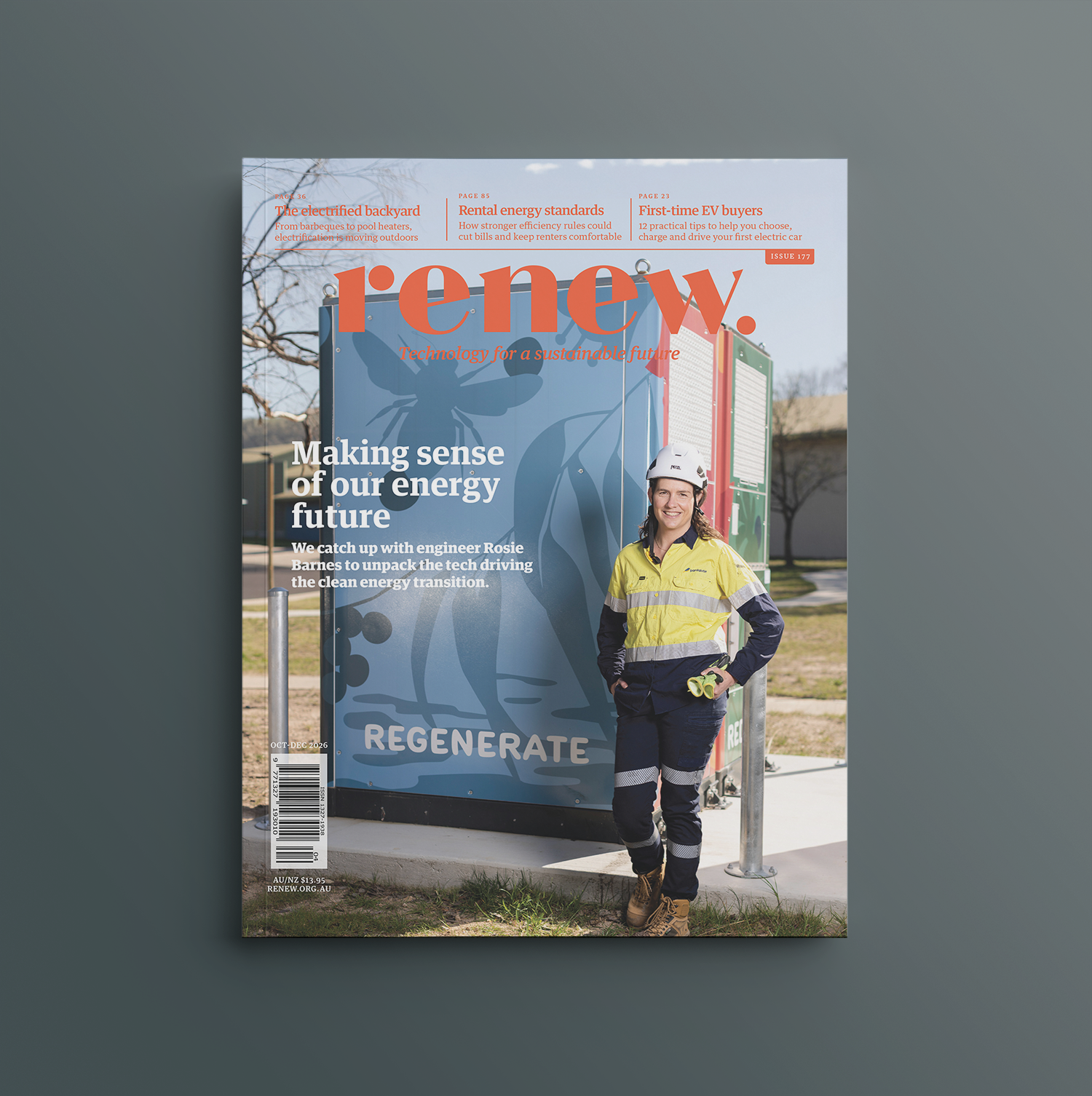
Since 1980, Renew has helped Australians live more sustainably with practical advice. But advice alone won’t get a sustainable home and clean energy to everyone. That takes governments willing to commit to policies that change things for the better, creating systems that support households.
Renew campaigns for homes that are healthier, more affordable and ready for a changing climate, for homeowners and rentals to have good information and support about home sustainability, and for strong consumer protections as our energy markets change fast.
We undertake independent research and advocate on behalf of households to push for policies that speed up the shift to renewable energy and cut emissions.

Energy efficiency standards for rentals
All homes should be healthy and affordable, but too many renters live in leaky, uninsulated homes that are too hot in summer, too cold in winter and cost too much to run. Renters pay around 8% more on energy bills than homeowners. They also depend on landlords to pay for upgrades like insulation or efficient heating, and landlords have little incentive to invest when the savings go to their tenants. Renew is calling on governments to set minimum energy efficiency standards that every rental home must meet. Victoria and the ACT have made a start, and NSW is now considering rental standards legislation.
Our Fit to Rent report shows what’s possible: in NSW, moderate upgrades cut energy bills by two-thirds to three-quarters while keeping homes at healthy temperatures.

Mandatory disclosure of home energy ratings
When you buy or rent a home, you can see how many bedrooms it has, what the parking is like and whether the water flow is good, but unless you are buying in the ACT, you have almost no way of knowing what it will cost to heat and cool, or how it will cope in a heatwave.
Australia’s energy ministers have agreed a national framework for disclosing home energy ratings, and NatHERS ratings for existing homes are being rolled out across the country. But each state and territory will decide whether disclosure is mandatory or voluntary, and whether it covers homes for lease as well as sale.
Renew is calling for mandatory disclosure of energy ratings on every home sold or leased, so buyers and renters can make informed choices and better homes are rewarded. It matters most for renters, who can’t see how a home is built and can’t fix it once they’ve signed the lease.
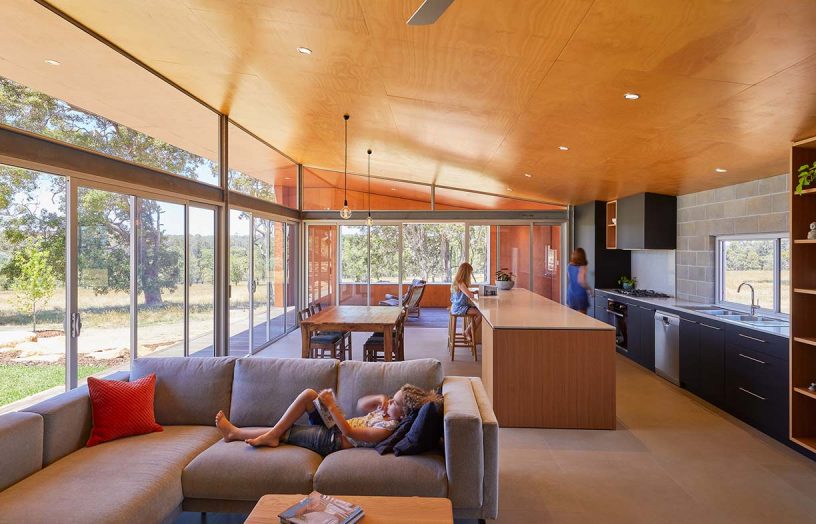
Retrofitting for resilience
The vast majority of Australian homes were built before minimum efficiency regulations were introduced in 2003, and average only 1.7 stars in terms of energy efficiency. Without action, this large stock of homes will continue to impose significant energy hardship, health and climate risks into the future. Efficiency upgrades for the average home could cut household energy bills by up to $1,300 a year depending on region.
Our 2024 research with Sweltering Cities found Australia’s homes aren’t built for the climate that’s coming. Brisbane homes could need twice as much energy for cooling by 2050, and a 7-star Queensland home built today could rate zero stars by 2090 under a severe climate change scenario. Read Future-proofing Australia’s homes →
People on low incomes, renters and social housing tenants are more likely to live in poor quality housing and rely on inefficient appliances that are cheap to buy but expensive to run. But those most in need are typically locked out of access to efficiency upgrades because they can’t afford the upfront costs, face language, cultural or other barriers, or rent their homes.

Consumer-focused energy markets
In the National Electricity Market, Renew is a formally recognised Consumer Advocacy organisation, and has been active and effective in energy market policy and regulatory issues over the past fifteen years. As part of our ongoing consumer advocacy work, Renew is a participant member of the National Consumer Roundtable on Energy.
Working in collaboration with other consumer advocates, Renew has played a key role in improving outcomes for Australian households.
Read more about Renew’s consumer-focused energy markets advocacy.
 Advocacy
Report: Fit to Rent: A Roadmap for Mandatory Energy Efficiency Standards in Queensland
Climate projections for Queensland point to hotter summers ahead. Brisbane, for instance, is expected to go from around two days a year above 35°C to roughly eight days by mid-century, under a high emissions scenario. The case for mandatory minimum energy efficiency standards is about more than comfort. It’s about making sure Queensland’s rental housing can be ready for the climate it will need to withstand. Insulation, shading, draught sealing, efficient air conditioning, heat pump hot water and solar can do exactly that. Mandatory energy efficiency standards are the missing piece to keep renters climate ready.
Read more Advocacy
Report: Fit to Rent: A Roadmap for Mandatory Energy Efficiency Standards in Tasmania
Tasmanian weather is getting more extreme, and many renters face them in homes that were never built for them. Insulation, draught sealing and efficient heating and cooling keep homes safe and affordable to live in. Renew’s new report, Fit to Rent, shows that with rental standards in place, healthier and more affordable homes are within reach for Tasmanian renters. Every cold winter without standards is another one renters pay for.
Read more Advocacy
Report: Fit to Rent: A Roadmap for Mandatory Energy Efficiency Standards in South Australia
Heatwaves in South Australia are getting longer and hotter, and many renters face them in homes that were never built for them. Insulation, draught sealing and efficient heating and cooling keep homes safe and affordable to live in. Renew’s new report, Fit to Rent, shows that with rental standards in place, healthier and more affordable homes are within reach for South Australian renters. Every summer without standards is another one renters pay for.
Read more