
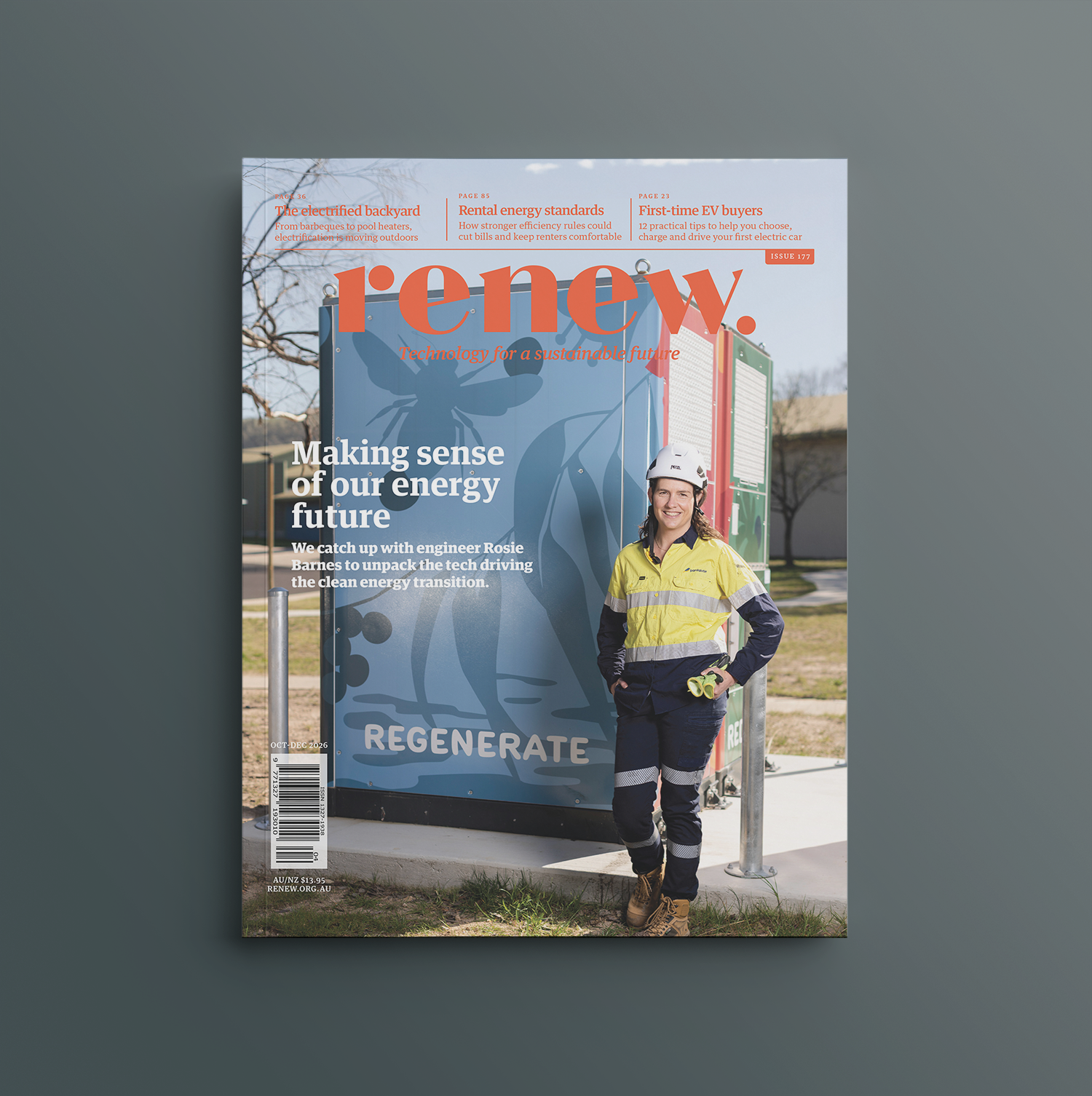
Is your rental property fit to rent?
Individual actions matter, but renters shouldn’t have to shoulder the responsibility for improving the energy efficiency of their homes.
Across Australia, many rental properties are poorly insulated, difficult to heat and cool, and expensive to run. Improving the quality of rental housing requires action from property owners, governments and the wider housing sector.
Renew’s recent research examines how energy efficiency upgrades and stronger rental standards could make homes healthier, more comfortable and affordable, while reducing household emissions.
A Roadmap for Mandatory Energy Efficiency Standards
Renew undertook research that models different scenarios for upgrading rental homes, examining their impacts on household energy bills, indoor temperatures and greenhouse gas emissions. We modelled climate regions across New South Wales, Tasmania, South Australia and Queensland, across many climate zones.
Far too many renters are living in homes that were never designed for today’s climate, especially the heatwaves that are becoming more frequent and intense. That means the homes they rent are uncomfortable, unhealthy, and too expensive or impossible to properly cool and heat.
Our research modelled three upgrade scenarios: minimum, moderate, excellent — across different climate zones across Australia. We investigated the upgrade costs, energy bill savings and greenhouse gas emissions for a standard 1970s three-bedroom home and found that moderate upgrades — ceiling and wall insulation, awnings on four east-west windows, draught sealing, two energy efficient reverse-cycle air conditioners, a heat pump hot water system, and a modest 4.5kW rooftop solar system — are the sweet spot where indoor temperatures move into a healthy range, energy use drops sharply, and the financial return on investment peaks.
What needs to change?
Most landlords wouldn’t want their tenants to be living in unsafe housing, in the same way that they wouldn’t want their own children or relatives to have to rent unsafe housing. But many people might not be aware of the risks of living in a home that is not efficient and doesn’t have adequate heating and cooling. They may also not be aware of the financial supports – including loans and rebates – that are in place that can help with home efficiency upgrades.
But there’s a solution that can help solve this problem: mandatory energy efficiency rental standards.
Rental standards are already in place in the ACT and Victoria, although those don’t really go far enough in terms of delivering housing equity for renters.
ACT: Rental properties with no ceiling insulation or insulation below an R-value of R2, need to install or upgrade the ceiling insulation to a minimum R-value of R5.
Victoria: The standards cover six areas: heating, cooling, hot water, shower heads, ceiling insulation and draught-sealing.
Three upgrade scenarios – minimum, moderate and excellent – were modelled in seven locations across NSW: Armidale, Coffs Harbour, Goulburn, Nowra, Penrith, Sydney and West Wyalong.
Key findings
1. Moderate upgrades (insulation, draught sealing, shading, reverse-cycle air conditioning, heat pump hot water, solar) delivered the strongest benefits through cutting energy bills by two-thirds to three-quarters across all NSW climate zones, while keeping indoor temperatures in a healthy 18–25.5°C range.
2. In most of the seven locations across NSW, annual bill savings outweigh the annual financing cost of the upgrades.
3. Implementing the “excellent” scenario adds to upgrade costs, yet delivers only marginal extra savings on bills for tenants. Homes upgraded to the excellent scenario do have greater comfort.
4. Upgrades deliver a sharp reduction in greenhouse gas emissions everywhere, and when solar is added, several locations generate more clean energy than they consume, turning net emissions negative.
READ THE FULL REPORT
Three upgrade scenarios – minimum, moderate and excellent – were modelled in four locations across Tasmania: Burnie, Sheffield, St. Helen’s and Hobart
Key findings
1. Moderate upgrades (insulation, shading, reverse-cycle air conditioning, heat pump hot water, solar) delivered the strongest benefits through cutting energy bills by 60% to 78% across the Tasmanian locations, while keeping indoor temperatures in a healthy 18–25.5°C range.
2. In three of the four locations across Tasmania, annual bill savings outweigh the annual financing cost of the upgrades. In St Helens, the bill savings are almost equal to the financing costs.
3. Implementing the “excellent” scenario adds to upgrade costs, yet delivers only marginal extra savings on energy bills for tenants. Homes upgraded to the excellent scenario do have greater comfort.
4. Upgrades deliver a sharp reduction in greenhouse gas emissions everywhere, and when solar is added, several locations generate more clean energy than they consume, turning net emissions negative.
READ THE FULL REPORT

Make your rental more affordable and comfortable
Whether you’re looking to lower your energy bills, make your rental more comfortable or reduce your environmental impact, there are ways to make a difference.
But when you’re renting, it isn’t always clear which changes you can make yourself and which require permission from your landlord or property manager.
Some improvements are simple and low-cost, such as using removable draught-proofing, putting up temporary window shading or reducing standby energy use. Others, including heating, cooling, insulation, solar panels and efficient hot water systems, will require the property owner’s involvement, approval and financing.
Check out practical guides to see how you can implement small changes that you can control, with plenty of ideas that don’t require permanent changes to your rental.
Small changes can add up. From keeping your home cooler in summer and warmer in winter to reducing water use and choosing energy-efficient appliances, our resources help you make sustainable choices that suit your home, circumstances and budget.
FIND OUT MORE ABOUT HOW TO MAKE YOUR RENTAL MORE SUSTAINABLE
Latest news
 Advocacy
Renew joins the call for a better deal for renters
Renew has joined the Healthy Homes for Renters collaboration in urging the Federal Government to provide funding and support to States and Territories to implement mandatory minimum energy performance standards in rental homes.
Read more Advocacy
Minimum energy efficiency standards would cut bills for Victorian renters
Minimum rental standards in Victoria for energy efficiency - draught sealing, insulation and upgrading to efficient electric appliances - would help tenants to make big savings on energy bills. And laws to make landlords pay for gas connection fees would help ensure tenants are not left behind using inefficient and expensive gas for heating, hot water and cooking.
Read more Advocacy
How energy efficient is the house you are buying or renting?
How can you tell how energy efficient your new home is? Renew's submission on Mandatory Disclosure outlines why it's a great idea for homes being sold or rented to come with an energy rating.
Read more