
Sweet spot

This Brisbane architect’s home is an exemplary demonstration that a 140-year-old house can be brought into the 21st century in style.
At a glance
- Original Queenslander rejuvenated and new wing added to west
- Energy rating sweet spot targeted for high performance with low embodied carbon
- Reclaimed materials used wherever possible
Petrie Terrace is one of Brisbane’s oldest inner suburbs, characterised by tiny blocks and equally tiny houses. When architect Andrew Noonan planned to expand his 1880s Queenslander to better accommodate his family, he was also focused on improving thermal comfort, buffering urban noise and maximising connection with the outdoors – all while retaining the building’s character.
The house had sat ten centimetres over the side boundary for 140 years, so it was lifted and slid over a couple of metres. “For all the benefits we gained – more daylight and ventilation, borrowed views of the neighbour’s garden, and access for repairing and maintaining the house more easily – it was definitely worth it,” says Andrew. With the house repositioned, a kitchen, dining, utility area and garage were inserted in the previously underutilised space underneath, and a new wing was added to the west with bedrooms upstairs and lounge downstairs. “We pulled back the facade of the new section to respect the history of the house and create a hierarchy of old and new,” says Andrew. Contemporary Weathertex cladding further differentiates the new wing from the old, but Andrew chose the same light colour for both, to unify the home and help reflect heat.
Having set out to achieve a 10-Star energy rating for the entire renovated and extended home, Andrew came close, with his initial design rating 9.6 Stars. However, he realised that some of the materials needed for such a high rating were at odds with his commitment to a net carbon zero home, and probably an overinvestment for a home without any active heating or cooling. “I removed a few elements that were high cost or high embodied energy, like the concrete slabs downstairs and the double glazing,” he says. “The heavy lifting for energy efficiency and thermal performance is really done by the orientation, insulation, shading and airtightness; we still achieved 7.7 Stars.” The house is now comfortable year-round and exports more energy from its rooftop solar system than it consumes.
The placement of windows and doors and the ratio of glazing to floor area was carefully considered, and airtightness to combat sound transfer and temperature extremes was optimised. Each room, upstairs and down, has at least two walls with openings to ensure good cross ventilation, enhanced upstairs by battened sections over internal doors. To provide sun shading and weather protection, glazed doors are recessed deep into the walls. Upstairs, these recesses are occupied by small, private decks, enabling maximum ventilation to bedrooms; inside, the pockets between them accommodate essential built-in storage.
Andrew is passionate about timber as the best construction material for a low-carbon home. New construction was framed and clad in timber, and the door and window joinery, engineered flooring and decking are all of responsibly-managed blackbutt. “Some people justify using carbon-intensive materials such as concrete for its longevity, but our house is timber and was there for 140 years before we did renovations to it. All timber needs is someone to look after it – that maintenance is part of the lifecycle assessment.”


To minimise material waste, Andrew used recycled and repurposed materials wherever possible, and carefully calculated dimensions and located openings to avoid offcuts. Kitchen cabinets, light fittings and glazing from the original house were repurposed, and colourful textured glass salvaged from the original verandah was reimagined as a feature window – paired with an extra pane of super low-e glass for better thermal performance. New cladding is installed as a ventilated facade, which – along with vents in the soffits – increases thermal efficiency significantly. The home is heavily insulated throughout, including beneath the timber-framed ground-level floor, something that’s rarely done in Queensland but that offers significant real-life benefit. Recycled bricks in the western reverse brick veneer wall provide thermal mass.

Managing stormwater as far as possible onsite was front of mind for Andrew, and important in this flood-prone area. Elevating the lower floors was essential. A rainwater tank collects roof water, and absorptive ground surfaces are maximised to deal with the rest, including permeable pavers, gravel, and brick pavers laid on sand.
Andrew has fitted a surprising amount of home on the 240-square-metre block, while retaining enough space for a delightful garden for the enjoyment of both the family and local wildlife. His partner Heather says that she now understands firsthand how her husband transforms spaces for the better. “I enjoy the new sanctuary-like vibe: we can retreat from noise of the city to peace and quiet,” she says. “The whole ground floor engages with the gardens, now secure from the street. I also love the stepping of spaces from inside to out, and how the ground floor feels generous despite actually being very compact.” Their kids also appreciate having their own spaces, with views into the trees of the neighbourhood. “Every aspect of the home is designed to be just enough – no more, no less – balancing efficiency with enduring comfort,” explains Andrew.
Further reading
 House profiles
Coastal calm
Prefabrication and a resolutely simple design were key to the realisation of this elegant, flexible-use backyard studio with beautiful ocean views.
Read more House profiles
Sound garden
Di’s cherished backyard music studio made way for a stylish new small dwelling, reusing many of its materials.
Read more House profiles
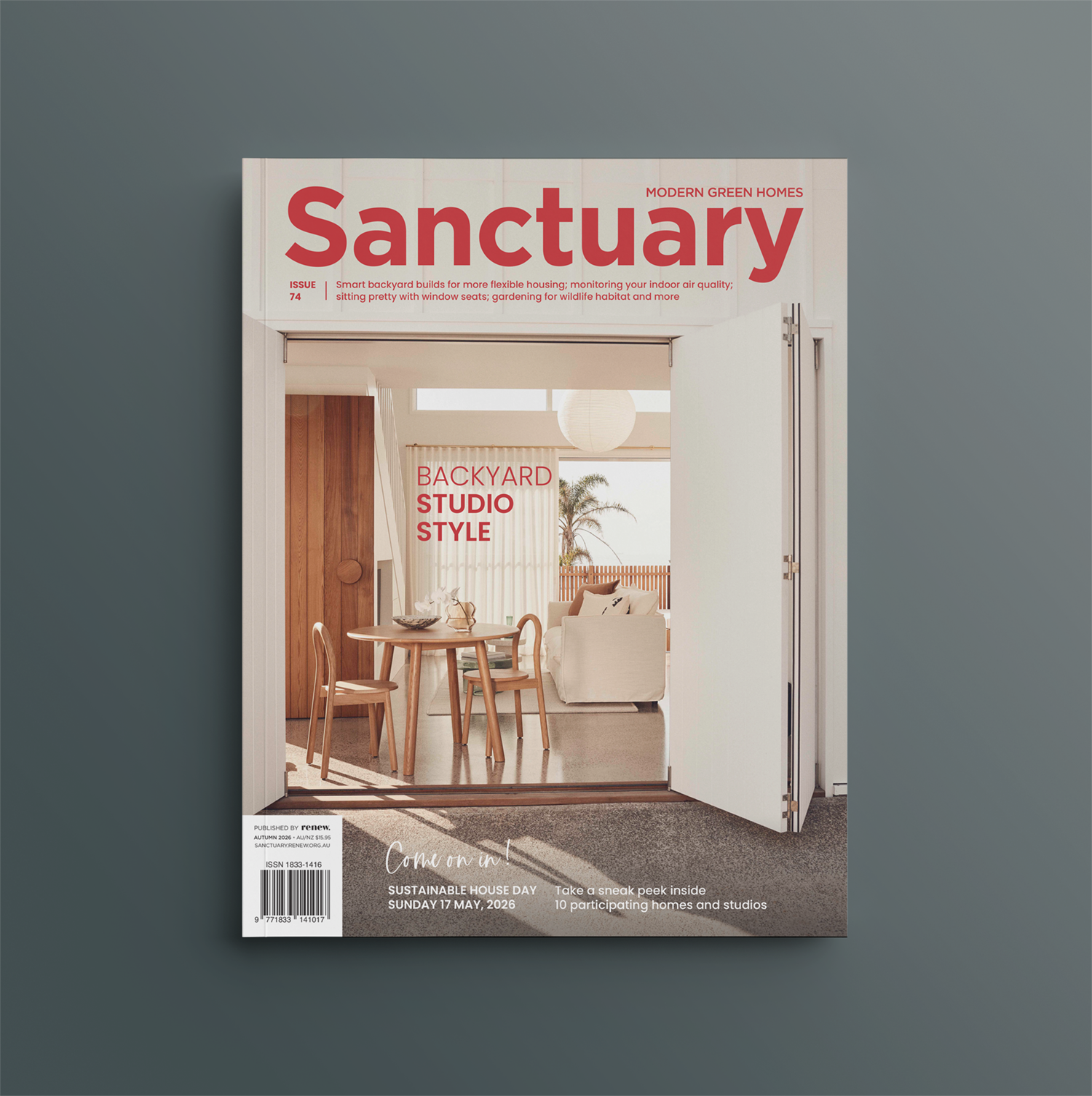
Sustainable House Day 2026: Come on in
Once a year, hundreds of people across Australia open their doors and share what they’ve learned about making their homes more comfortable, affordable and climate-ready.
Read more