Death is not the end…

… well, not for sustainable living, anyway. Michaela Burns investigates the intersection of sustainability and death.
Whether we embrace it or do our best to pretend it’s not going to happen to us, death is a part of life. And even if our approach to our own inevitable demise is to rage against the dying of the light, most of us acknowledge death to the extent of making some preparations for it: we agonise over our wills, pay big companies for life insurance, and whisper to loved ones our thoughts on what might happen next. Whether for the sake of our partners, our children, or our own peace of mind, most of us make plans for those left behind.
Most of us also have some sort of preference about what will happen to our bodies once we no longer inhabit them. Generally, the choice is a simple one: a casket or an urn. A burial or a cremation. Few of us, however, consider the potential environmental impacts of those options—or of death in general.
This seems strange to think about. When we’re alive, we use metal straws, compost our food, reuse and recycle and shop sustainably. We hold companies to the standards to which we think they should be held: demanding that they dispose of their waste responsibly, use recycled material where possible and offset their carbon footprint, lest they risk losing our patronage. Any consideration of the environment is ultimately a consideration of the future, because while the effects of climate change are starting to become tangible, its most drastic consequences will be felt beyond most of our lifetimes.
So it’s hard to argue that we don’t care about the world we leave behind. Nevertheless, surprisingly few of us consider how the act of leaving the world will affect it.
Burial, cremation, and carbon dioxide
This wasn’t always something people had to consider, of course—previous generations’ posthumous preferences were rarely informed by the indirect impacts of their death on people they’d never met.
Today, though, the reality of the world in which we live means that we don’t have the luxury of assuming that our impacts on the environment stop the moment our lives do.
In 2008, the Sydney Morning Herald reported on a study commissioned by the cemetery at Centennial Park in Adelaide into the greenhouse emissions generated by funerals. The study found that a single burial generated approximately the equivalent of 39 kg of CO2, while a cremation generated approximately 160 kg.
It makes sense that in the short term, cremation is significantly more carbon-intensive than burial—the former involves the incineration of an entire human body, while the latter involves digging (and filling in) a hole. But what about the long-term impacts?
Perhaps surprisingly, in the long run, burial generates more emissions than cremation: some 10%, to be precise. Why? As the cemetery’s chief executive Bryan Elliott explained to the SMH, “We must look after the gravesite for a number of years by watering and mowing the surrounding lawn area and maintaining the concrete beam on which the headstone is placed.” Ultimately, Elliott said, “Burial is a more labour and resource intensive process, consumes more fuels and produces [more] waste than cremation.”
On average, 480 Australians die every day. It’s hard to get up-to-date figures, but at current rates, a good estimate is that around 30% of those 480 will be buried, with the other 70% choosing cremation. This means the simple act of putting to rest each person who dies on a given day in Australia to rest will generate the equivalent of 53,760 kg of CO2. That’s more than twice the amount of CO2 that a single living Australian is expected to generate each year. In fact, according to Victorian funeral home BARE Cremation, the energy needed to cremate a single body is equivalent to the power an average person uses in a month.
Cremation also releases harmful gases into the environment, the most common being vaporised mercury—from amalgam fillings in teeth—and dioxins, both of which can be extremely toxic. However, burial also has many hidden environmental impacts. Embalming a body requires chemicals like formaldehyde, glutaraldehyde and phenol. When the body begins to deteriorate, these chemicals can leak into the surrounding earth, eventually entering and damaging our waterways. Thankfully, this process is not as popular in Australia as it is in places like the USA. Nevertheless, bodies that decompose in the ground—especially elaborate, sealed caskets and coffins—do so anaerobically, in a process that releases large amounts of methane and hydrogen sulfide. Such caskets and coffins are also often made from mined metals, toxic plastic or endangered wood.

Image: supplied.
Closer to home
Annie Dejong, CEO of Ballarat Cemeteries, understands the importance of sustainability and has been working on bringing it to the forefront of what she and her team do everyday.
“Ballarat Cemeteries has implemented a strategy to reach net-zero emissions in the future as part of its commitment to environmental management.” Together with BREAZE, Ballarat Cemeteries has installed a closed loop energy system designed to gradually reduce the cemetery’s use of power from the grid, this includes solar infrastructure that can be used to run a more energy efficient water pump and a backup battery power system. Annie explains that “Ballarat Cemeteries current sustainability strategy has been structured to ensure that Ballarat New Cemetery can continue to offer services to the community for the next 80 years.” She goes on to explain that the growing awareness of the “extent of the death care industry’s impact on the environment means that we have a responsibility to the community to start making changes at all levels of our business.”
Some of the steps that Annie and her team have taken to provide greener funerals for the Ballarat community include environmentally friendly coffins, caskets or shrouds, shallower burials which speed up the natural processes that allow a body to return to the earth, an energy efficient cremator that uses 45% less gas, sustainable urns, natural headstones and Living Legacy Trees, a process which “involves treating cremated ashes so that they create energy molecules that can go on to nourish plantations of memorial trees.” Planting a single tree, Annie says, is generally enough to offset the carbon impact of cremation.
The alternatives to the big two
If all of this seems a bit disheartening, you can rest easy [As it were—Ed.] in the knowledge that there are many bright, like-minded people all over the world who have been looking for solutions to this problem. Here are some of the ways people have found to make traditional burial or cremation more sustainable, along with some alternatives to those two approaches:
Green funerals
Green funerals are offered all over Australia and are becoming increasingly popular. According to end-of-life services comparison website Gathered Here, such funerals involve “preparing the body for burial without the use of chemical preservatives or disinfectants and then burying the body in a green coffin, casket or shroud, without the grave liner or burial vault, and with no headstone.” The site also recommends burying the body in a shallower grave than the traditional six feet under, as that depth requires heavy earth moving equipment.
Wicker caskets and coffins
People have been making furniture and containers from wicker for over 5000 years; it is the oldest known method for such constructions.
Wicker is made from a range of natural materials such as willow, rattan, seagrass, reed or bamboo. Caskets and coffins made from such materials are both cheaper and more sustainable than those made of wood. Many funeral homes claim that willow, in particular, is carbon neutral, in that it gives off the same amount of CO2 when burnt as it absorbs during its lifetime. While this claim is technically true, it’s also true of all timber—carbon isn’t conjured from thin air, after all—and it’s also important to note that while the carbon absorbtion is over the course of a tree’s life, it is released instantly when the timber is burnt.
Nevertheless, wicker remains a better alternative than solid wood—it uses less plant material, and wicker caskets and coffins are also generally constructed without the use of toxic varnishes, glues, plastics or metals. The plants used replenish themselves quickly. They also take less time to decompose than other materials, and the nature of the material allows more oxygen to reach the body, meaning anaerobic decomposition (and the accompanying release of methane gas) is reduced.
Bio urns
When a body is cremated, the remaining ashes are often stored in an urn. Many such urns are ceramic, which means that they are fired in kilns—a process that is energy intensive and usually fueled by natural gas. Ceramics also last thousands of years, which will be great for the archaeologists who return to Earth from Mars in the year 4000 to dig up the remains of our civilisation, but less appealing in terms of minimising our present-day impact.
Bio urns are containers made of alternatives to ceramics: materials that degrade completely over time, leaving no dangerous or harmful chemicals behind. There are many different options for such urns; the two most popular in Australia are Soul Trees and Eco Water Urns.
Soul Trees seals a loved one’s ashes into a two-chamber urn made from coconut shells, cellulose and compacted peat. The top chamber is filled with the necessary components for growing a tree. As the urn degrades and the seed grows, its roots reach down into the second chamber, absorbing the ashes into the growing plant. Over time, what is left is a living “soul tree” that can be visited by loved ones in place of a grave.
An Eco Water Urn, meanwhile, is used when loved ones wish to scatter ashes into oceans, lakes or rivers. Made by The Living Urn, these natural and 100% biodegradable packages have a timed release that ensures the urn will float for a decent amount of time, before releasing the ashes and sinking into the water.
Alkaline hydrolysis/Aquamation/“water cremation”
Not to be confused with burial at sea—which is the release of a body into the ocean, and generally requires special approval from the Federal Government—“water cremation” is a process whereby a body is broken down by alkaline hydrolysis. The body is placed within a sealed unit that’s filled with a solution of potassium hydroxide in water. The solution is heated to near boiling, and after a few hours, the only thing left of the body is the bones, which are easily reduced to a soft, white ash. These ashes can be returned to the family if desired.
Proponents estimate that this process produces less than 10% of the emissions emitted by traditional cremation, and the significantly lower temperature means that pollutants like mercury are not released during the process: they can be safely recovered after the hydrolysis is complete, along with objects like hip replacements and pacemakers. (This also means that the body does not need to be cut into beforehand to remove such devices.)
The process received a significant amount of publicity in early 2022 with the death of South African anti-apartheid hero Archbishop Desmond Tutu, who chose it for himself. Water cremation is relatively new to Australia; Victorian company Aquamation has offered the process since 2009, and still remains the main provider, although other companies are slowly adopting the idea.
Mushroom burial suits
While it’s not yet available in Australia, this unique idea is stirring up well needed conversation around green funerals and the impact buried bodies have on the environment. The mushroom burial suit—or Infinity Burial Suit, as it is advertised in America—is a biodegradable garment for the deceased that aims to neutralise contaminates that may exist within the body. It uses a form of mycoremediation, a process whereby fungi act as a natural decomposer. The fungi secrete several extracellular enzymes that are capable of decomposing and digesting the chemicals that bodies create as they decompose.
Leaving your body to science
Somewhere in a remote and secret area of the Australian bush, there’s a farm that’s filled with bodies in different states of decomposition. While it might sound like the beginning of a horror story, this body farm—or, to give it both its proper name and its strangely cutesy acronym, the Australian Facility for Taphonomic Experimental Research (AFTER)—is actually a research institution.
The facility was established in 2016 to investigate how bodies behave in various decomposition scenarios, and its research has given scientists unprecedented insight into the unexpected ways that bodies can act—including, most recently, the rather disquieting discovery that bodies’ limbs can change positions quite significantly after death.
The bodies at AFTER have been donated by generous families—and even if that particular use doesn’t sound like your idea of a posthumous good time, it’s not the only way to give your body to the pursuit of science. Donated bodies can also be used for medical research, usually through universities, to help train nurses, doctors and medical scientists.
It’s not always as simple as registering a body to be donated, as some are automatically excluded based on previous health records, but if it’s something you or a loved one is interested in you can find more information at a number of universities across Australia, including Melbourne University, Macquarie University and James Cook University.
The little things
The options set out above are all significant choices that an individual preparing for their end of life can make to ensure that their death has as little impact on the environment as possible. However, the minimisation of damage isn’t (and shouldn’t be) entirely up to them. When it comes to celebrating someone’s life with a funeral, there are many things that those left behind can do to ensure the celebration is as sustainable as possible.
Some of these things include creating electronic Order of Services, rather than distributing paper programs; dressing the bodies of loved ones in biodegradable materials like cotton, silk or wool; planting a tree in memory of a loved one; ensuring that any flowers left at the gravesite are free from plastic ties or packaging; and organising sustainable transportation of the deceased from funeral home to gravesite.

Funeral practices around the world
The idea of water cremation or mushroom burial suits might sound strange if you’ve grown up in a predominantly Western country, with the accompanying Judeo-Christian notions of what death involves. But it’s important to realise that even those ideas are evolving rapidly: while the Bible doesn’t forbid cremation, various denominations of Christianity have historically preferred burial (perhaps because cremation was a practice of other faiths). A generation ago, burial was by far the preferred option; according to the National Funeral Directors Association, cremation only overtook burial in 2015, but at that point, they were projected to account for 71% of funerals by 2030. If anything, that estimate has most likely risen since then.
Elsewhere in the world, of course, cremations have been the norm for millennia. Hindu cremations have taken place on the Ganges river in India for thousands of years, and as anyone who has visited Varanasi can attest, they continue to do so. And similarly, people of different religions and cultures have long practiced end of life rituals that go beyond a simple burial or cremation.
One such ritual, common for both Zoroastrians—particularly Parsi communities in India—and Tibetan Buddhists is a practice called a sky burial. This involves leaving the body to be consumed by vultures. The Tibetans see this practice as a last gift to the universe, and it is considered a good omen if the vultures consume every part of the body, leaving nothing behind.
Zoroastrian motivations are perhaps less romantic, although perhaps also more pragmatic; the decomposing dead were seen as sources of pollution, and placing them atop towers to be consumed prevented that pollution spreading to the living. Either way, the sky burial is sustainability personified—even if, paradoxically, it is becoming rarer in the modern world, for a number of reasons. (Depressingly, these reasons include a decline in vulture populations due to climate change.)
It’s important to remember that end of life practices differ from culture to culture, from religion to religion, all over the world. What works for one culture may not work for the rest. It is not our job to tell people how they should honour their dead. But it is our responsibility to ensure that we are as informed as possible so that when our own time comes, we are able to make the choices that work best for us and our loved ones, and hopefully leave the earth a little bit better than we found it.
Perhaps an important part in the conversation about death and sustainability is the notion that we emphasise “respectable” ways to lay a body to rest. We find ways to preserve the body: a grave to visit, ashes to keep, something tangible to remind us of a person who we loved or admired.
In other cultures, the body is seen as a vessel, a thing which serves no purpose once the soul itself has passed on. Perhaps this is something that Australians can learn too—and in letting go of the desire to hold on, we also find a way to preserve the world for those who must keep on living.
Further reading
 gardening
FOGO, humus and the magic in between
Compost is one of nature’s most effective recycling systems. Whether it’s created in a backyard worm farm or a municipal-scale FOGO facility, the process follows the same basic principles. Thom Fox explores how organic waste becomes nutrient-rich compost—and how you can replicate the process at home.
Read more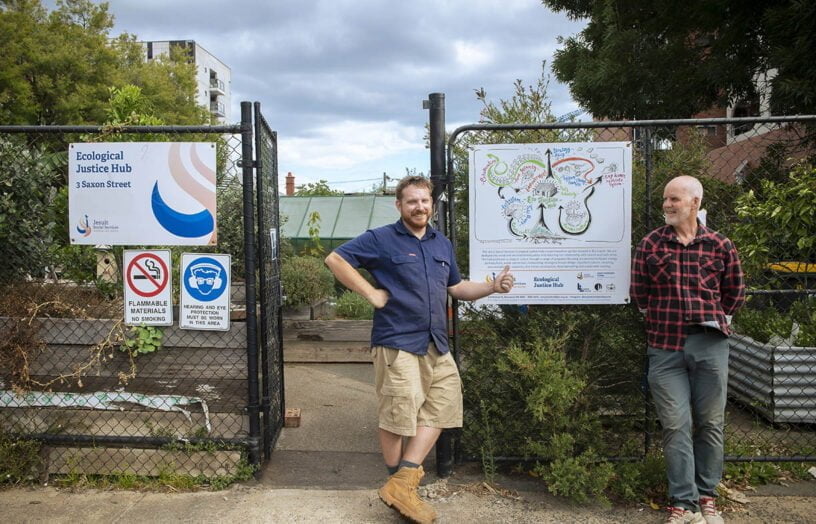 Reuse & recycling
Community eco hub
Nathan Scolaro spends 15 minutes with Stuart Wilson and Michael McGarvie from the Ecological Justice Hub in Brunswick, Melbourne.
Read more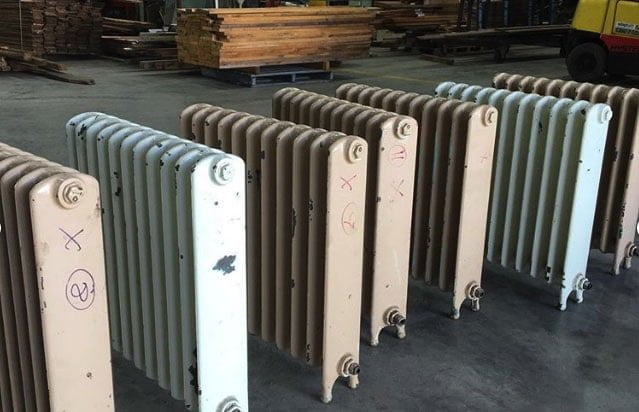 Reuse & recycling
Recycled hydronic heat
Renew’s sustainability researcher Rachel Goldlust gives us a view of and from the Salvage Yard.
Read more